Frequently asked questions

Whether you’re thinking about genetic testing or already completed your MyRisk test, these FAQs can help you understand what to expect and where to get support.

Getting tested with MyRisk

  • Is the MyRisk test right for me?

    You may be eligible if you have a personal or family history of certain cancers, such as rare cancers, cancers that occur at a younger age than usual, or cancers that affect multiple relatives. Even if your family history doesn’t show a strong pattern, you can still choose to be tested.
    Take this short quiz to find out if MyRisk testing may be recommended for you.
  • How do I get tested?

    There are two ways to get the MyRisk test. You can work with your healthcare provider, who can order the test and guide you through your results as part of your overall care. This approach allows for ongoing coordination and a deeper understanding of how your results fit into your health plan. You can also request the test through a virtual consultation with a healthcare provider. In this case, you’ll work with a healthcare provider online, and a test kit can be shipped directly to your home. This option offers added convenience while still providing expert support to help you understand your results and next steps.
  • Which testing option is right for me?

    If you already have a healthcare provider and would like testing coordinated through your existing care team, you can discuss the MyRisk test with them directly and have them order it.
    Virtual care may be a good choice if you don't currently have a healthcare provider, prefer the convenience of online care, or want to get started quickly.
    Take the next step with the MyRisk test
  • How does virtual care work?

    With virtual care, you'll meet online with a licensed clinician who will review your personal and family health history and determine whether the MyRisk test is appropriate for you. If testing is recommended, your clinician can order the test without requiring an in-person office visit.
  • What happens next?

    Once your test is ordered, you'll receive a collection kit and instructions for providing your sample. After your blood or saliva sample is returned and analyzed, your results will be shared with you through your healthcare provider or virtual care clinician. Together, you'll review your results and discuss any recommended next steps based on your individual risk profile.

Results

  • Does a positive test result mean I have cancer?

    Genetic testing does not tell you if you currently have cancer. Your test results will tell you about your inherited risk of developing cancer in the future.
  • How will I receive my results?

    Your results will be shared through your healthcare provider or virtual care clinician. They can review your results with you and discuss any recommended next steps.
  • When will I receive my results?

    Results are typically available within 14 days from when we receive your sample.
  • Where can I access my results?

    Your results will be made available through your healthcare provider or virtual care clinician. Additional information may also be available through the Patient Portal.
  • Can I speak with a genetic counselor about my results?

    Yes. Myriad’s board-certified genetic counselors are available for a complimentary phone consultation to help understand test results and help guide conversations with a healthcare provider.
  • Can my genetic test results provide information that may be relevant for family members?

    Yes. Because genetic mutations can be inherited, your test results may provide important information about cancer risk for biological relatives. Sharing your results with family members may help them better understand their own risk and encourage conversations with their healthcare providers about whether genetic counseling, genetic testing, or additional cancer screening may be appropriate.
  • What does a positive result mean for my family members?

    A positive result means a genetic mutation associated with increased cancer risk was identified. Biological relatives may have inherited the same mutation and should consider speaking with a healthcare professional or genetics specialist about whether testing for the known mutation is appropriate. The results may help guide decisions about increased cancer screenings and other risk-reducing measures.
  • What does a negative result mean for my family members?

    A negative result means no genetic mutation was identified for you through this test. However, it may not explain the cause of a family's increased cancer risk. Family members should still discuss their personal and family history with a healthcare professional or genetics specialist to determine whether genetic testing, increased surveillance, or other risk management measures may be appropriate.

RiskScore®

  • Is the RiskScore analysis a separate test?

    No. The RiskScore analysis is automatically included for female patients as part of MyRisk hereditary cancer testing. There is no additional sample required. The RiskScore analysis uses information from your MyRisk test, along with personal and family history information, to provide personalized five-year and remaining lifetime breast cancer risk estimates.
  • Does everyone receive a RiskScore analysis result?

    No. The RiskScore analysis is available for female patients who meet specific criteria:
    • Women between ages 18 and 84
    • No personal history of breast cancer
    • Negative for a breast cancer-related gene mutation*
    *Must also not have any blood relatives with a known high-risk breast cancer-related gene mutation. Patients of European or Ashkenazi Jewish ancestry with a CHEK2 mutation will receive a RiskScore.
  • What is the Tyrer-Cuzick score?

    The Tyrer-Cuzick score is a widely used model that estimates a person’s breast cancer risk based on factors like age, personal health history, and family history of cancer. While it’s a helpful starting point, it doesn’t look at a person’s actual genetic makeup. MyRisk with RiskScore goes further by analyzing specific genetic changes linked to hereditary cancer, allowing it to identify more people who may be truly at increased risk.
  • What’s the difference between the Tyrer-Cuzick risk assessment and RiskScore analysis?

    Both the Tyrer-Cuzick risk assessment and the RiskScore analysis are tools used to estimate breast cancer risk. The RiskScore analysis goes a step further by incorporating genetic markers associated with breast cancer risk in addition to personal and family history information. This broader approach helps provide a more personalized assessment of breast cancer risk and has been shown to be twice as accurate at risk assessment based on clinical factors alone.

Understanding Costs

  • Does my insurance cover MyRisk testing?

    95% of commercial and federally-funded insurance plans cover hereditary cancer testing,1 and most eligible patients pay $0.2 For those that do have an out-of-pocket cost, we offer options to make testing accessible and more affordable.
  • How do cost estimates work?

    After your sample is received, Myriad reviews insurance information and provides a personalized estimate of any potential out-of-pocket cost before testing is performed. It’s important to open your estimate when you receive it. If your estimate shows you have an out-of-pocket cost, you have options. Contact us right away to:
    • discuss financial assistance
    • bypass insurance and directly pay an affordable, fixed price for testing
    • cancel your test
    We will honor the stated cost shown in your estimate. If we don’t hear from you before your test results are reported, which is usually 4-5 days after we receive your sample, we’ll file a claim with your health insurance company. Your insurer may send you an Explanation of Benefits (EOB), but this is not a bill. What’s the difference?
  • How much will it cost?

    Insurance coverage

    95% of commercial and federally-funded insurance plans cover hereditary cancer testing,1 and most eligible patients pay $0.2 For those that do have an out-of-pocket cost, we offer options to make testing accessible and affordable.

    Virtual care cost breakdown

    1. Eligibility consultation with board-certified genetic counselor: FREE
    2. The MyRisk test kit order (if eligible): $39 - charged at the time of order
    3. Lab & testing cost:
      • Once your sample is received, you'll get a cost estimate.
      • If the estimate is over $249, please call to discuss your options.
  • What if I don’t have insurance?

    Uninsured patients in the U.S. who meet specific financial and medical criteria may be eligible for free or reduced-cost testing. Patients whose insurance policy does not cover testing or have a high deductible can choose to pay an affordable, fixed price for testing by opting out of using insurance. Contact us for more information.

Payment & Financial Assistance

Billing Questions

  • Why didn’t my cost estimate include a price?

    In some cases, additional information is needed before a final cost can be determined. If your estimate directs you to contact Myriad, our customer service team can review your situation, explain your options, and answer questions about your potential costs.
    Myriad’s Customer Service
    (800) 469-7423
    [email protected]
  • I didn’t receive a cost estimate. What should I do?

    Cost estimates are typically sent by email and/or text message after your sample is received. If you have not received a cost estimate within a few days, please contact Myriad Customer Service for assistance.
    Myriad’s Customer Service
    (800) 469-7423
    [email protected]
  • What is the difference between an Explanation of Benefits (EOB) and a bill?

    An Explanation of Benefits (EOB) is a notification sent by your insurance company that describes how they covered the cost of services you received from a healthcare provider or laboratory, like Myriad. The EOB shows the amount paid by your insurance company and the amount that you may owe. An EOB is not a bill and doesn’t typically require you to take any action. A bill (or statement) is a request for payment from a healthcare provider or laboratory and shows the amount of money you owe for a service you received.

Do you have questions?

We're here to help. If you have questions about the MyRisk test, testing options, costs, or what to expect, our support team can provide general information and help guide you to the next step that's right for you.

Talk with the MyRisk test support team
Call: (800) 469‑7423
Email: [email protected]

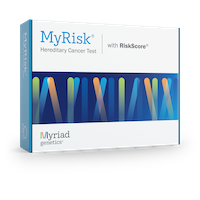
MyRisk Hereditary Cancer Test with RiskScore test kit

It's simple to get started

Test at-home through virtual care or in-person with your healthcare provider.

References

  1. CDC. Retrieved from: https://www.cdc.gov/high-quality-care/hcp/resources/preventive-services-coverage.html
  2. Patients with insurance or who qualify for financial assistance. Based on a review of 12 months of claim data for major U.S. insurance carriers, most patients face no out-of-pocket costs. Last updated 2025.