How MyRisk® testing works

The MyRisk testing process is designed to be straightforward and supportive. You’ll learn how genetic testing works, from your initial consultation through receiving your results and discussing next steps with a healthcare provider or genetic counselor.

The science behind the MyRisk test

The MyRisk test analyzes 63 genes associated with 11 hereditary cancers, including breast, breast, prostate, colorectal, pancreatic, skin, lung, gastric, ovarian, endocrine, uterine, renal and others. By identifying inherited genetic changes linked to cancer risk, the MyRisk test helps provide a clearer understanding of your personal risk profile.

Combined with information about your personal and family health history, these insights can help support more informed conversations about screening, prevention, and care.

Breast cancer
Ovarian cancer
Prostate cancer
Pancreatic cancer
Uterine cancer
Colorectal cancer
Skin cancer
Gastric cancer
Renal cancer
Lung cancer
Endocrine cancer
Other

Two ways to test

At-home through virtual care

Testing at home offers a convenient way to access genetic testing without the need for an in-office appointment. From provider review to results support, the entire process can be completed from home while still providing access to licensed healthcare professionals and expert guidance every step of the way.


In-person through your provider

If you already have a healthcare provider, in-office testing may be a good option. Your provider can help determine whether genetic testing is right for you, order the test, and guide you through the process from sample collection to results review. Once your results are available, you'll work directly with your provider to understand what they mean and discuss any recommended next steps.

How testing works

Getting started with the MyRisk test is straightforward. Here’s what you can expect throughout the testing process.

Step 1: Start with a consultation

Connect with a board-certified genetic counselor or healthcare provider to determine whether MyRisk testing may be right for you.

Step 2: Receive and return your kit

Collect your sample and return it to the laboratory for analysis using the provided packaging.

Step 3: Get your results

Review your results with a healthcare provider or genetic counselor and discuss any recommended screening, prevention, or next steps.

Support at every step of the way

From testing to results, support is available throughout the process. Board-certified genetic counselors can help explain your report, answer questions, and provide additional information about your results and next steps.

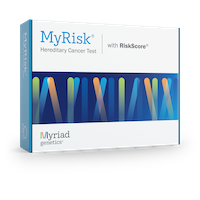
MyRisk Hereditary Cancer Test with RiskScore test kit

It's simple to get started

Test at-home through virtual care or in-person with your healthcare provider.

Frequently asked questions

See more FAQs

  • Can my genetic test results provide information that may be relevant for family members?

    Yes. Because genetic mutations can be inherited, your test results may provide important information about cancer risk for biological relatives. Sharing your results with family members may help them better understand their own risk and encourage conversations with their healthcare providers about whether genetic counseling, genetic testing, or additional cancer screening may be appropriate.
  • What does a positive result mean for my family members?

    A positive result means a genetic mutation associated with increased cancer risk was identified. Biological relatives may have inherited the same mutation and should consider speaking with a healthcare professional or genetics specialist about whether testing for the known mutation is appropriate. The results may help guide decisions about increased cancer screenings and other risk-reducing measures.
  • What does a negative result mean for my family members?

    A negative result means no genetic mutation was identified for you through this test. However, it may not explain the cause of a family's increased cancer risk. Family members should still discuss their personal and family history with a healthcare professional or genetics specialist to determine whether genetic testing, increased surveillance, or other risk management measures may be appropriate.
  • Can I use my HSA or FSA to pay for testing?

    Yes. HSA/FSA funds can be used to cover any out-of-pocket costs associated with the MyRisk test.