A clearer picture starts with genetic testing for cancer risk

The MyRisk® Hereditary Cancer Test can help you understand whether you’re at increased risk for 11 common cancers, giving you the chance to take action earlier.

Understand your hereditary cancer risk

The earlier you know the more options you have. This simple genetic test analyzes 63 genes linked to 11 common cancers including breast, prostate, colorectal, pancreatic, skin, lung, gastric, ovarian, endocrine, uterine, renal and others.

You may be at increased risk if your family has:

  • Multiple of the same type of cancers on the same side of the family
  • Young family history of cancer that is diagnosed at a young age (50 or younger)
  • Rare cancer in your family like ovarian, male breast cancer or pancreatic cancer

Is MyRisk right for you?

Breast cancer
Ovarian cancer
Prostate cancer
Pancreatic cancer
Uterine cancer
Colorectal cancer
Skin cancer
Gastric cancer
Renal cancer
Lung cancer
Endocrine cancer
Other

Could hereditary cancer testing be right for you?

Answer 3 quick questions to learn whether your personal or family history may suggest an inherited risk for certain cancers.

Have you or anyone in your family been diagnosed with cancer such as breast, colon/rectal, or uterine before age 50?

Why it matters: Cancer diagnosed at a younger age can sometimes be linked to an inherited genetic condition.

Have you or a family member been diagnosed with a rare cancer, such as ovarian, pancreatic, or male breast cancer?

Why it matters: Some rare cancers are more strongly associated with inherited genetic mutations and may warrant genetic testing.

Have 3 or more of your relatives on the same side of your family had multiple related cancers, such as breast and prostate cancer or colon and uterine cancer?

Why it matters: Certain patterns of cancer within a family can be a sign of an inherited genetic risk.

Your answers suggest that MyRisk® testing may be worth discussing.

MyRisk testing can provide additional information about your inherited cancer risk and help support informed conversations with your healthcare provider about next steps.

Your responses did not suggest common signs of hereditary cancer risk.

This brief quiz is not a comprehensive risk assessment and does not evaluate all factors that may influence hereditary cancer risk.

If you’d like to learn more about your inherited cancer risk, hereditary cancer testing may still be worth discussing with a healthcare provider.

What's included with your results:

Your personal risk of developing certain types of cancer
Your 5-year and remaining lifetime risk of breast cancer*
Easy to understand results for you and your provider
Complimentary education with a board-certified genetic counselor
Personal care recommendations to discuss with your provider
*Included for eligible female patients who meet specific criteria.
  1. Judkins, et al. Development and analytical validation of a 25-gene next generation sequencing panel that includes the BRCA1 and BRCA2 genes to assess hereditary cancer risk. BMC Cancer 2015. DOI: 10.1186/s12885-015-1224-y.
The MyRisk test is
>99%
accurate1

Using your results to help plan ahead

Personalized health insights

Learn your hereditary cancer risk and gain insights that can help inform a more personalized approach to your healthcare.

Make proactive health decisions

Gain information that can help inform prevention, monitoring, and treatment decisions.

Uncover family insights

Collect important genetic information that may help relatives better understand their own cancer risks.

Affordable testing options

95% of commercial and federally-funded insurance plans cover hereditary cancer testing,2 and most eligible patients pay $0.3 Coverage depends on your personal and family history, and support is available to help you understand your options before you move forward.

HSA/FSA funds can be used to cover any out-of-pocket costs associated with the MyRisk test.
Most eligible
patients pay3

$0

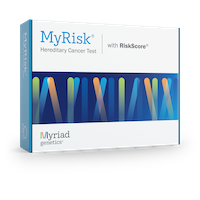
MyRisk Hereditary Cancer Test with RiskScore test kit

It's simple to get started

Test at-home through virtual care or in-person with your healthcare provider.

How it works

Step 1

Request the MyRisk test through virtual care or your preferred healthcare provider.

Step 2

Send in your saliva or blood sample for lab analysis.

Step 3

Get your results in 14 days and review with a board-certified healthcare provider.

What real patients are saying about the MyRisk test

“I felt like cancer was coming for me, [but after I got MyRisk], I knew I had options, and I had a game plan.”

—Ashley D.
MyRisk Hereditary Cancer Test Patient

“I feel telling my story now is more important than ever. Because I need women to know that this is an option and possibly help save their life.”

—Jodi L.
MyRisk Hereditary Cancer Test Patient

“I’m glad I had this available. Good to catch things on the front end. Knowledge is power…”

—Ed H.
Prostate Cancer Survivor
previous-slide next-slide

Frequently asked questions

  • Is the MyRisk test right for me?

    You may be eligible if you have a personal or family history of certain cancers, such as rare cancers, cancers that occur at a younger age than usual, or cancers that affect multiple relatives. Even if your family history doesn’t show a strong pattern, you can still choose to be tested.
    Take this short quiz to find out if MyRisk testing may be recommended for you.
  • How do I get tested?

    There are two ways to get the MyRisk test. You can work with your healthcare provider, who can order the test and guide you through your results as part of your overall care. This approach allows for ongoing coordination and a deeper understanding of how your results fit into your health plan.
    You can also request the test through a virtual consultation with a healthcare provider. In this case, you’ll work with a healthcare provider online, and a test kit can be shipped directly to your home. This option offers added convenience while still providing expert support to help you understand your results and next steps.
  • Does my insurance cover MyRisk testing?

    95% of commercial and federally-funded insurance plans cover hereditary cancer testing,2 and the majority of patients face no out-of-pocket costs for the MyRisk test with RiskScore assessment.3 For those that do have an out-of-pocket cost, we offer options to make testing accessible and more affordable.
  • How much will it cost?

    Insurance coverage

    95% of commercial and federally-funded insurance plans cover hereditary cancer testing,2 and most eligible patients pay $0.3 For those that do have an out-of-pocket cost, we offer options to make testing accessible and affordable.

    Virtual care cost breakdown

    1. Eligibility consultation with board-certified genetic counselor: FREE
    2. The MyRisk test kit order (if eligible): $39 - charged at the time of order
    3. Lab & testing cost:
      • Once your sample is received, you'll get a cost estimate.
      • If the estimate is over $249, please call to discuss your options.
  • Can I use my HSA or FSA to pay for testing?

    Yes. HSA/FSA funds can be used to cover any out-of-pocket costs associated with the MyRisk test.
  • Does a positive test result mean I have cancer? 

    Genetic testing does not tell you if you currently have cancer. Your test results will tell you about your inherited risk of developing cancer in the future.
  • Can I speak with a genetic counselor about my results?

    Yes. Myriad’s board-certified genetic counselors are available for a complimentary phone consultation to help understand test results and help guide conversations with a healthcare provider.
  • How is my genetic information protected?

    Protecting your privacy is a top priority. Myriad is committed to safeguarding your personal, health, and genetic information through privacy, security, and compliance practices designed to help keep your information secure.
    • HIPAA Privacy Protections: Myriad follows the requirements of the Health Insurance Portability and Accountability Act (HIPAA), which establishes standards for protecting health information and limits how it can be used and shared.
    • HITRUST-Certified Security: Myriad maintains HITRUST-certified security controls that are independently assessed against recognized healthcare industry standards designed to help protect sensitive health and genetic information.
    • Genetic Information Nondiscrimination Act (GINA): Federal law provides protections against certain uses of genetic information. In general, GINA prohibits health insurers from using genetic information to determine eligibility or premiums and prohibits employers from using genetic information in employment decisions.
    • For more information, please review our Notice of Privacy Practices.

References

  1. CDC. Retrieved from: https://www.cdc.gov/high-quality-care/hcp/resources/preventive-services-coverage.html
  2. Patients with insurance or who qualify for financial assistance. Based on a review of 12 months of claim data for major U.S. insurance carriers, most patients face no out-of-pocket costs. Last updated 2025.